


TL;DR
- Ragnarok Twilight features five base classes: Swordsman, Archer, Mage, Thief, and Acolyte, each with unique roles and progression paths.
- The Artispirit system is crucial for builds, allowing players to prioritize attributes for PvE or PvP, impacting overall performance without requiring resets.
- Swordsman is the most beginner-friendly class, excelling in AFK farming and providing high survivability, making it ideal for casual players.
Disclaimer: This summary was created using Artificial Intelligence (AI)
In this Ragnarok Twilight class guide, we’ll walk you through every playable class from stat distribution to Artispirit priority, so you can stop second-guessing your build and start grinding efficiently.
Ragnarok Twilight has five base classes: Swordsman, Archer, Mage, Thief and Acolyte.
Each has a different role, different ceiling and different price to play well. We’ll cover them all with the straight F2P vs whale truth for each.
How the Job System Works in Ragnarok Twilight
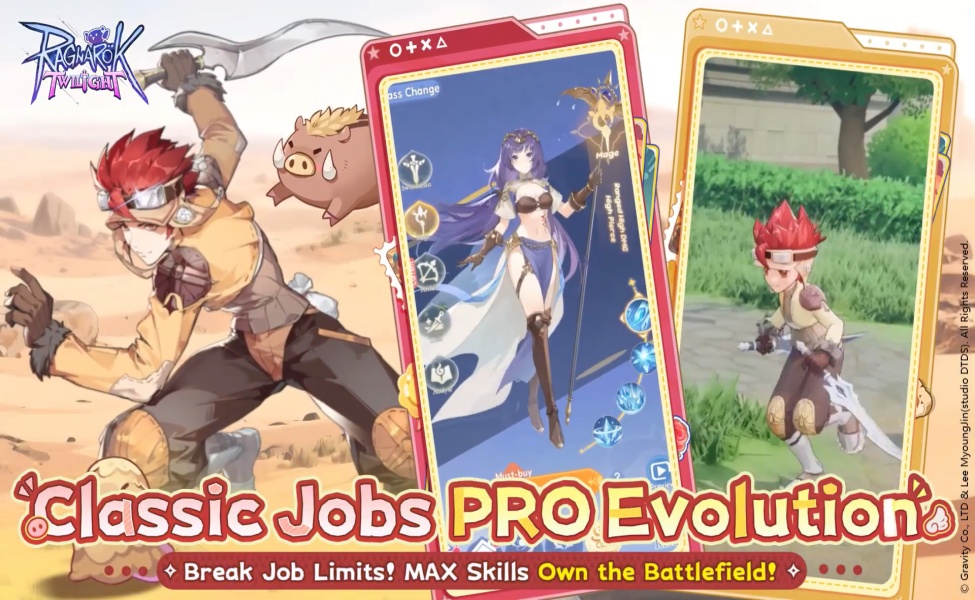
You start as a Novice (classic RO tradition, still alive here) and promote into your first job during the early tutorial near Prontera. Around level 10, you lock into one of the five career paths.

Your second promotion lands around level 40, and higher-tier advancements open up later near level 100.
Unlike the multi-branch classic RO tree (2nd job → Transcendent → 3rd → 4th), Ragnarok Twilight streamlines progression for mobile. Skill trees specialize through the Artispirit system rather than branching job paths.
The key splits are PvE vs. PvP builds, and those are determined primarily by Artispirit attribute priority, not by job choice alone.
Stats (STR, AGI, INT, VIT, DEX, LUK), gear, and Artispirit upgrades carry across promotions. No hard resets. That said, class choice is fairly permanent early on; the game doesn’t have a free reroll button.
Experiment on alt accounts or via multi-instance emulators if you want to test builds before committing your main.
Artispirit System: The Real Build Layer
Before getting into classes, you need to understand Artispirit because this is where your actual build lives.
Artispirit is a passive stat upgrade system built around smelting gear, using Gene Capacitors, and hitting breakthroughs for permanent bonuses. The attribute priority splits cleanly by content type:
- Red attributes → PvP focus. These are Player DMG Bonus and Player DMG Reduction. Max these if you’re serious about Imperium War, cross-server PvP, or guild battles.
- Pink attributes → PvE focus. Priority order: DMG > CRIT > Hit > Dodge. These carry your solo farming, MVP hunting, and dungeon efficiency.
For light spenders and F2P players, the daily auto-upgrade events and login rewards make Artispirit progression accessible.
You won’t max it instantly, but consistent play catches up faster than in most mobile MMORPGs. Events are designed to funnel Artispirit materials so use them.
See Also: Ragnarok M Classic Farming Tier List: Best Jobs for Zeny Farming
All Ragnarok Twilight Classes: Full Breakdown
Below is the exact stat distribution, skill pathing and gear prioritization for the core jobs.
Swordsman

Role: Primary tank, crowd control anchor, frontline sustain.
Job Path: Swordsman → Knight → Lord (with Lord Knight skills like Aura Blade and Soul Destroying Injury unlocking at higher tiers)
Stat Priority:
- VIT first for HP and DEF scaling
- STR second for melee damage output
- Some AGI/DEX for attack speed and accuracy in hybrid builds
Skill Focus: Start with defensive skills (HP boosts, damage reduction) and melee CC. In the Lord line, prioritize Soul Destroying Injury first and it deals the most damage and applies healing suppression plus bleed.
Follow up with Fighting Will/Burst for sustained output, then Corrupted Ambush Weakness for the offensive utility combo. Aura Blade adds crit rate and damage scaling for hybrid builds once your survival stats are solid.
PvE Performance: The easiest class to AFK farm with. High HP means mobs rarely interrupt your offline session. Pull small groups, let auto-attack handle the clearing. Works at any level range without micromanagement. Great for players running the game on a low-spec phone who can’t babysit it.
PvP/WoE/Imperium War Performance: Swordsman is the anchor of any guild squad. You draw aggro, eat CC, protect your backline. Not a carry class; you enable your Mage and Archer to operate safely. In the Lord hybrid build, you can deal surprising burst with Soul Destroying Injury chains while still being the hardest target on the field.
MVP Hunting: Solid. High sustain means you can facetank MVP abilities that would chunk other classes. You won’t top the damage meters, but you’ll never get one-shot while your party burns the boss down. Good for tagging MVPs solo because of the survivability floor.
Gear Direction (Mid/Late Game): Focus high DEF, HP bonuses, and resistance gear. Smelt orange 3-star pieces for breakthroughs. For PvP, shift toward gear that feeds your red Artispirit stats. Weapon: anything with attack speed or critical rate for the hybrid build.
F2P Viability: High. You don’t need premium gear to function. Auto-hunt works on low-investment gear because your HP carries you.
Overall: The best beginner class. Most forgiving, lowest skill floor, useful in every content type. If you want to play casually without dying in your AFK sessions, this is your pick.
Archer
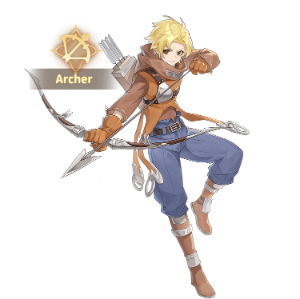
Role: Long-range sustained damage, single-target burst, the undisputed king of auto-hunt efficiency.
Job Path: Archer → Hunter → Sniper
Stat Priority:
- AGI primary — attack speed, critical rate, and dodge all scale here
- DEX secondary — raw damage, hit rate, and range penetration
- Light VIT investment if you’re running solo in dangerous zones
Skill Focus: Attack speed buffs first; they multiply everything else you do. Then stack critical rate skills and range/penetration passives. Traps and slows give you hard utility in dungeons and PvP for when enemies close the gap.
PvE Performance: The best farming class in Ragnarok Twilight. Ranged attacks mean monsters die before they reach you, which translates directly to higher kills-per-hour in offline auto-hunt.
With the 100% equipment drop rate from MVP Hero Transformation, an Archer sitting at a good spawn point generates materials faster than any other class. Boss tagging is also strong here; high crit + attack speed melts single targets.
PvP/Imperium War Performance: Good damage but positional. You need distance to perform, and skilled opponents know to dive you.
In organized guild PvP, you’re a backline damage dealer protected by a Swordsman; that comp works well. Solo skirmishes are riskier because you have limited options once melee reaches you. Traps bridge that gap.
MVP Hunting: Top-tier. Safe kill speed, high single-target DPS, easy reposition if the MVP has a dangerous AoE. One of the strongest solo MVP hunters in the game.
Gear Direction (Mid/Late Game): ATK gear, CRIT rate, attack speed. Accuracy is usually covered by DEX scaling. For PvP, stack ranged damage bonuses in Artispirit.
F2P Viability: Very high. The farming efficiency means you generate more Zeny and materials per hour than other classes, which funds your own gear progression. A good F2P loop.
Verdict: The meta pick for anyone who prioritizes resource generation and auto-hunt efficiency. Best class if you want your account growing while you sleep.
Mage

Role: Mob clearer, AoE burst, elemental damage dealer.
Job Path: Mage → Wizard → High Wizard (Storm Gust, Meteor Storm, Lord of Vermillion still hit like trucks)
Stat Priority:
- INT primary; all magic damage, spell power, and healing efficiency scales from here
- DEX secondary; cast speed is the bottleneck that INT alone doesn’t solve
- Light VIT for survivability if you’re solo in non-protected zones
Skill Focus: Spell power and magic penetration first. Cooldown reduction next; shorter cooldowns on AoE spells means faster mob clear.
AoE range upgrades extend the farming footprint, which matters in auto-hunt. CC skills (slows, freezes) handle dangerous situations and make dungeons cleaner.
PvE Performance: The best AoE farmer in the game. Tight mob clusters at spawn points get wiped in a single cast cycle. Combined with Ragnarok Twilight’s 100% MVP drop system, a Mage clearing large groups generates drop volume faster than any single-target class. Strong for early-to-mid game leveling speed and dungeon event farming.
PvP/Imperium War Performance: High burst, but you need to be positioned mid-to-back range and avoid getting dived. A Mage with no tank cover is dead fast. In organized guild play, Mages are devastating; the burst disrupts enemy formations and the CC locks targets for your melee to finish. Solo PvP is trickier; you need either a Thief-style positioning game or a tank peeling for you.
MVP Hunting: Good burst for kill speed, but the glass-cannon stat spread means single-hit MVP mechanics can punish you. Pairs better with a Swordsman or Acolyte in duo MVP runs than solo.
Gear Direction (Mid/Late Game): Magic DMG amplification gear, cast speed reduction, MP regeneration. Mobility skills become essential; don’t neglect them in the skill tree.
F2P Viability: High. AoE farming is one of the most efficient money-making loops, and Artispirit pink attributes amplify it without needing premium gear.
Summary: Best pick if you want satisfying clear speed and strong PvE performance. High floor for beginners who know how to stay back, higher ceiling for players who learn positioning. Gets genuinely dangerous in endgame group PvP.
Thief
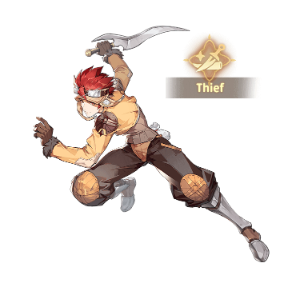
Role: Ambush specialist, backline killer, evasion-based damage dealer.
Job Path: Thief → Assassin → Assassin Cross (Sonic Blow, Katar Mastery, Shadow Edge define the kit)
Stat Priority:
- AGI primary — attack speed, dodge, and overall mobility. Artispirit for Thief prioritizes AGI as primary.
- STR secondary — raw melee damage
- LUK for critical rate (Assassin Cross scales better on LUK than most classes)
Skill Focus: Burst and crit skills first: Sonic Blow, Katar Mastery, Shadow Edge. These define your kill windows. Then dodge/evasion passives and stealth skills for survivability and repositioning. Build burst before evasion; evasion with no damage output just prolongs fights you won’t win.
PvE Performance: Functional for solo hunting. High dodge means you take less damage than raw HP numbers suggest, but you’re not as forgiving as Swordsman in AFK scenarios. If monsters surround you (common in dense spawn points), dodge evens out at volume and you start getting hit. Best solo farming happens at sparse, well-spread spawn points where you control engagement timing. Not the worst AFK farmer, but not the best either.
PvP/Imperium War Performance: The best class for killing high-value individual targets. Stealth into position, burst a healer or key DPS, escape before the response.
This is the Thief’s job in group content; not frontlining, not sustaining, just finding the target that can’t be allowed to live and removing them from the equation. Timing discipline is everything. One mistimed Sonic Blow with no escape route and you’re dead.
MVP Hunting: Secondary DPS role. High burst helps on kill speed but low survivability means you need to avoid MVP cleave and AoE zones. Works well in a party where a Swordsman takes the hits. Solo MVP runs are riskier and require positioning discipline.
Gear Direction (Mid/Late Game): Critical rate and ATK speed are the primary gear targets. Evasion-boosting equipment compounds the AGI scaling. For PvP, target gear that increases burst window damage so you need kills fast or you’re exposed.
F2P Viability: Medium. The class performs well on moderate investment, but the skill ceiling is higher; poor play costs you deaths that compound in AFK sessions. Stronger in the hands of experienced mobile MMORPG players.
Results: High reward, real skill requirement. Best-in-class for PvP players who want to be the answer to enemy healers. Weaker pick if you’re primarily AFK farming or playing casually.
Acolyte
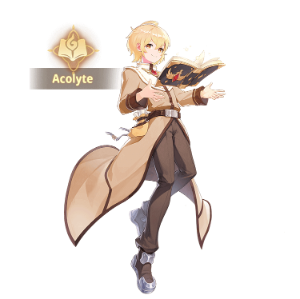
Role: Party healer, buffer, debuffer, the reason your team doesn’t wipe.
Job Path: Acolyte → Priest → High Priest
Stat Priority:
- INT primary; healing potency and SP pool both scale from INT
- VIT secondary; survival so you don’t die before you can cast
- STR if running Battle Priest (mace-bonking) for early solo play
Skill Focus: Healing output first; HPS (heals per second) determines your team’s survivability ceiling. Protective buffs second (shields, damage reduction). Debuffs and curses for utility. Mana regeneration skills so you don’t go dry mid-dungeon.
PvE Performance: Acolyte’s solo play is workable early with a Battle Priest build (STR/INT hybrid, mace auto-attack). It’s not efficient, but it’s not helpless either.
The core design is party-dependent; solo AFK grinding on a pure healer build is slow and frustrating. If you’re primarily a solo player, this is the wrong class.
Party/Dungeon Performance: Non-negotiable in high-level content. Any serious dungeon run, MVP farm, or guild war becomes significantly harder without one. Consistent healing output lets your Swordsman facetank things they’d otherwise die to.
Your buffs and damage reduction multipliers add effective HP to the entire team. The Acolyte isn’t glamorous, but teams with one perform measurably better than teams without.
PvP/Imperium War Performance: High strategic value in organized guild PvP. Keeping your carries alive during Imperium War siege phases is worth more than one extra DPS class. Top-end PvP guilds want at least one Acolyte in every squad.
Gear Direction (Mid/Late Game): Survivability gear with barrier or shield bonuses. Mana pool and regeneration stats. If you die, your whole team dies; protect yourself first, then amplify your healing output.
F2P Viability: High for party content, low for solo efficiency. Works if you’re consistently in a guild with active party members. Struggles if you’re playing solo most of the time.
Conclusion: Skip as your main if you play solo or casually. Essential if you’re embedded in a guild doing late-game content. The most impactful class in organized team play, the least efficient in isolation.
See Also: Ragnarok Origin Tier List 2025: Top Classes for Victory
Best Classes in Ragnarok Twilight: Quick Reference
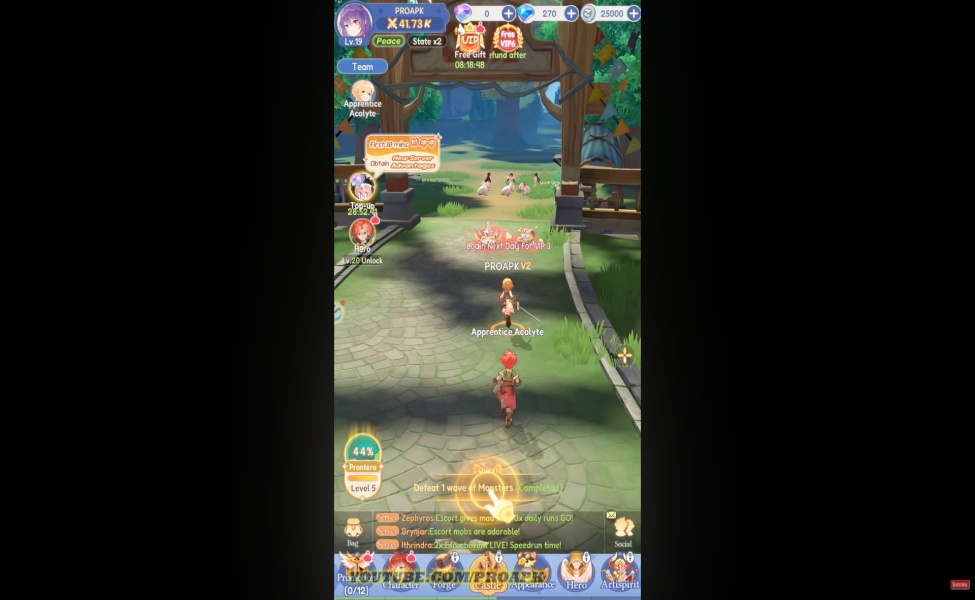
Swordsman and Archer cover the most ground for most players. Swordsman for casual, low-maintenance play. Archer for anyone optimizing farm efficiency. Mage is close behind for players who can position consistently.
| Playstyle / Content | Best Class | Why |
|---|---|---|
| Beginners | Swordsman | Hardest to die, simplest rotation, forgiving AFK |
| AFK Farming (F2P) | Archer | Ranged = more kills/hour, great drop generation |
| AoE Mob Clearing | Mage | One cast clears packs, fast level/material farming |
| PvP / Target Deletion | Thief | Best burst, stealth initiation, hard to catch |
| Dungeons / Group Content | Acolyte | Team sustain, mandatory for serious party play |
| MVP Hunting (Solo) | Archer | Safe range, high single-target DPS, repositionable |
| Guild Wars / Imperium | Full comp: Swordsman + Mage/Archer + Acolyte + Thief | Synergy over any single-class carry |
MVP Hunting: Class Roles Explained

Classic RO was a pain to fight MVPs for drops. Ragnarok Twilight is much easier, as MVPs drop 100% of the time with Hero Transformation. Here’s how every class fits:
- Archer: Best solo hunter. High ranged DPS, mobile enough to dodge MVP patterns.
- Mage: High burst windows, great for fast kills on low-HP MVPs. Needs cover on tanky bosses.
- Swordsman: Best solo tank. Can absorb MVP mechanics while auto-hunting. Lower kill speed but much lower death risk.
- Thief: Strong burst on kill, weak on sustained fights. Best as secondary DPS in a duo run.
- Acolyte: The enabler. Duo or party MVP runs are significantly faster and safer with one.
The get-KS’ed experience is still real in Ragnarok Twilight (some things never change). Archers and Mages can tag MVPs faster with ranged damage; useful if you’re racing other players to a boss.
See Also: Ragnarok M Classic Official Release Date, OBT and Pre-Registration
F2P vs. Whale Reality Check
No class in Ragnarok Twilight is hard-locked behind whaling to function. The idle progression systems, 100% MVP drops, and consistent daily rewards create a genuinely competitive F2P loop. That said:
- Swordsman and Archer are the most F2P-efficient because their value comes from base stat scaling and playstyle efficiency, not premium gear output.
- Mage scales well on spell power gear, which you can obtain through events and dungeon drops without top-ups.
- Thief gets a noticeable boost from crit/ATK speed gear; some of the better pieces come from gacha or cash shops, pushing it slightly toward the “better with investment” side.
- Acolyte needs gear for survivability more than damage, mostly accessible through standard progression.
If you’re a light spender or F2P, prioritize Artispirit auto-upgrades from daily events, dismantle duplicate orange 3-star gear for Gene Capacitors, and focus breakthroughs on your class-core passive stats. That progression path outperforms raw gear spending for most of the game’s content.
For Big Cat Gems, Ragnarok Twilight’s premium currency, topping up through Lapakgaming gives you the best rates with a fast, secure process.
If you’re investing in your Artispirit or picking up gacha gear for that extra edge in Imperium War, top up Big Cat Gems at Lapakgaming and skip the hassle of in-app payment limits.
See Also: The Ragnarok 2-2 Job Release: All About Job Class Updates
This Ragnarok Twilight class guide should give you a clear picture of where each class fits and what it costs to play one well.
The game is genuinely balanced; there’s no useless class, no single dominant meta pick that breaks everything else. What separates players at the endgame is Artispirit prioritization, gear enhancement, and understanding your class role in team content.
New players: start Swordsman or Archer. They’re the straightest line from Novice to functional mid-game character. Experienced MMORPG players who understand positioning can jump straight into Thief or Mage for a higher ceiling.
For the latest balance changes, meta shifts from post-2026 patches, and Artispirit core discussions, check the official Ragnarok Twilight EN Facebook page (@EN.ROTwilight) and active player groups; the community shares build updates fast.
And when you’re ready to push your account further in Imperium War or pull for that Assassin Cross gear, remember to buy Big Cat Gems through Lapakgaming for the best rates and instant delivery.
FAQs
The five base classes are Swordsman, Archer, Mage, Thief, and Acolyte. Each class has a different role, ceiling, and cost to play effectively.
Each class requires different stat allocations and Artispirit priorities to optimize their builds. This guide covers the specific distributions for each class to help you grind efficiently without second-guessing your choices.
The best class depends on your preferred playstyle and budget. Swordsmen excel in melee combat, Archers in ranged damage, Mages in area spells, Thieves in burst damage and mobility, and Acolytes in support and healing roles.
Why buy crystals from a random site when you can Ragnarok Origin Classic topup at Lapakgaming? Trusted platform with complete payment options for MY gamers.
TL;DR
- Ragnarok Twilight features five base classes: Swordsman, Archer, Mage, Thief, and Acolyte, each with unique roles and progression paths.
- The Artispirit system is crucial for builds, allowing players to prioritize attributes for PvE or PvP, impacting overall performance without requiring resets.
- Swordsman is the most beginner-friendly class, excelling in AFK farming and providing high survivability, making it ideal for casual players.
