

TL;DR
- Honkai Star Rail features a zone-based exploration system where players unlock regions through Trailblaze Missions, with each world consisting of multiple sub-areas.
- There are three main types of maps in Honkai Star Rail: Exploration Maps (safe zones and NPC hubs), Combat Zones (enemy-heavy areas), and Special Instances (like Simulated Universe).
- Map completion in Honkai Star Rail requires strategic exploration, including activating Space Anchors, solving puzzles, and revisiting old worlds after updates to unlock new content.
Disclaimer: This summary was created using Artificial Intelligence (AI)
The Honkai Star Rail Map is literally your gateway to an ever-expanding universe.
Every location feels like stepping into a completely different world with its own rules, factions, and secrets.
Treasure chests, Warp Trotters, hidden missions, Stellar Jade… they’re all waiting for you across these maps.
So before you rush into another battle, maybe it’s time to zoom out, study the Honkai Star Rail Map breakdown, and explore it!
How the Honkai Star Rail Map System Works
First of all, you need to understand one thing → HSR maps are zone-based exploration areas.
That means:
- You unlock regions through Trailblaze Missions.
- Each world has multiple sub-areas.
- Exploration rewards you with Stellar Jades, Relics, upgrade materials, and hidden lore.

This kinda like interconnected chapters rather than one endless sandbox. There are three main types of maps:
- Exploration Maps: Safe zones, cities, NPC hubs, shops, and story progression areas.
- Combat Zones: Enemy-heavy areas with treasure chests, puzzles, Warp Trotters, and elite monsters.
- Special Instances: Simulated Universe, Forgotten Hall, Echoes of War. These aren’t overworld maps but still crucial for progression.
See Also: Sparxie Honkai Star Rail Build, Kit & Release Date
All Worlds in Honkai Star Rail Map (Version 1.0 – 4.0)
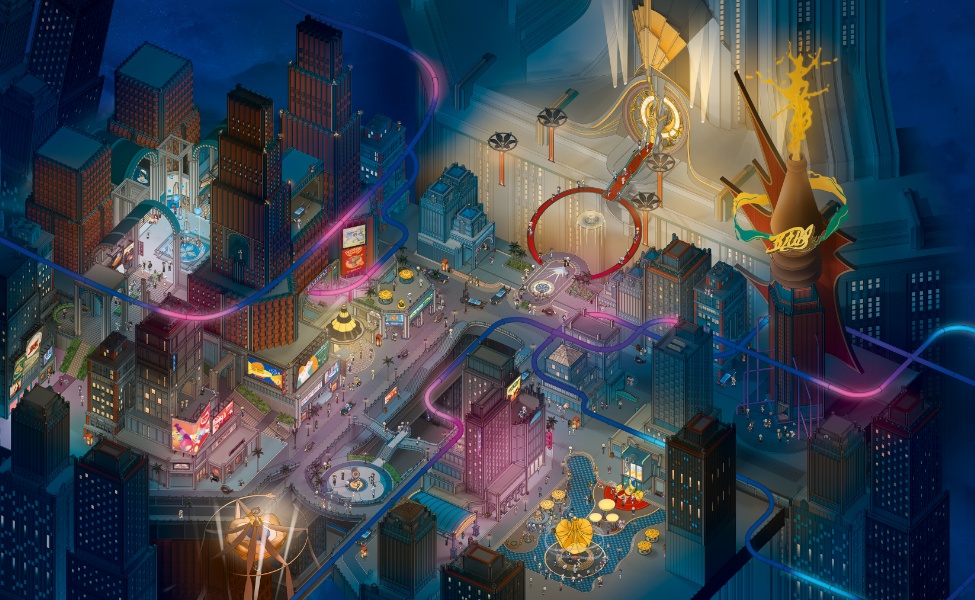
One of the biggest reasons the HSR Map feels so alive is that every world has its own identity. Different cultures. Different governing factions. Different Path philosophies.
And most importantly, completely different exploration vibes. From frozen wastelands to dreamlike cities and god-ruled civilizations, below is your complete breakdown of all worlds from Version 1.0 to 4.0.
Astral Express (Version 1.0 – Ongoing)
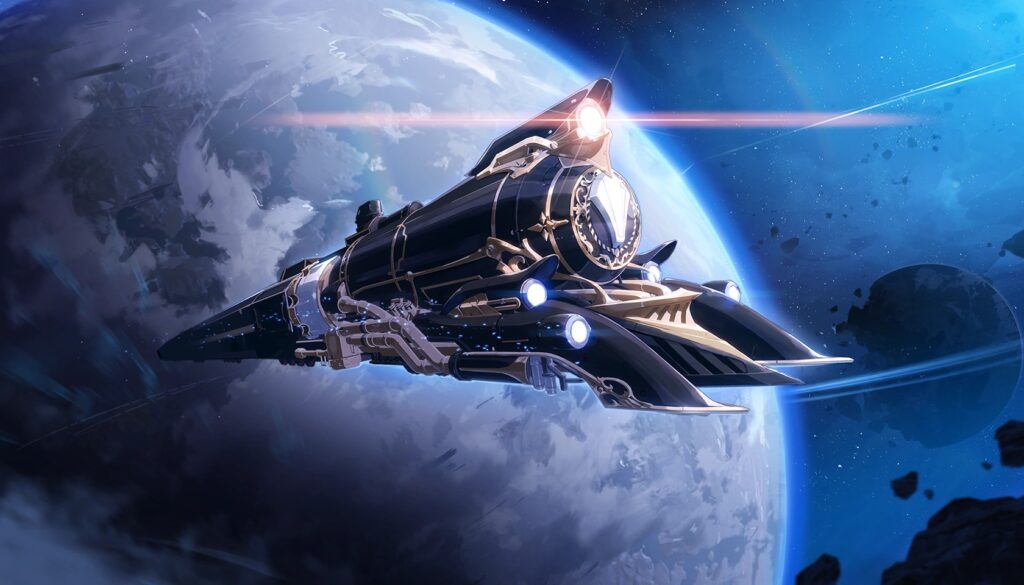
Governing Body: The Nameless
This is your home base. Your intergalactic train. Your safe zone between chaos.
While it’s not a combat-heavy world filled with treasure chests, the Astral Express is the emotional backbone of the game.
You’ll interact with companions, unlock dialogue, and starting in Version 2.7, explore the Party Car and your customizable Trailblazer Room.
It’s cozy. It’s personal. And it constantly evolves as the story moves forward.
Herta Space Station (Version 1.0)
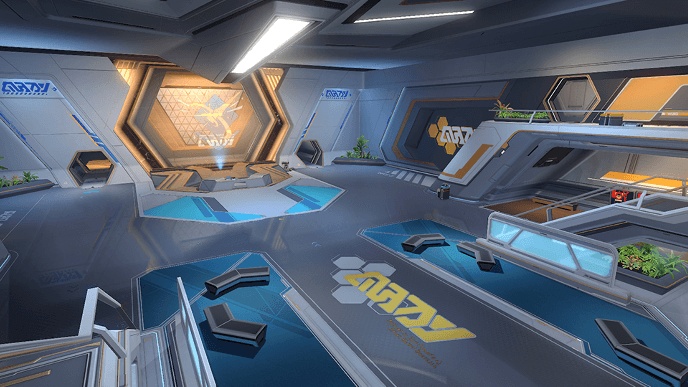
Governing Body: Herta
Your first real map, and your introduction to how exploration works in HSR.
Herta Space Station serves as both a tutorial and a story catalyst.
But don’t underestimate it. The station is packed with early treasure chests, Warp Trotters, puzzles, and farming zones like Calyxes and Stagnant Shadows.
Main Zones:
- Base Zone
- Storage Zone
- Supply Zone
- Seclusion Zone
It’s compact compared to later worlds, but it teaches you one important lesson: explore everything.
Jarilo-VI (Version 1.0)
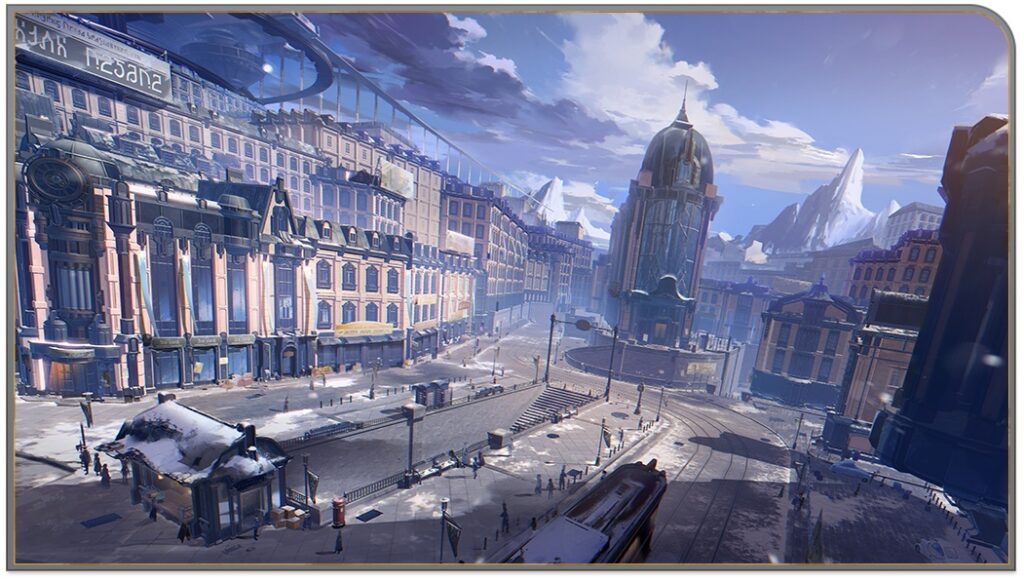
Governing Body: The Architects
Now we’re stepping into a full-scale planetary arc.
Jarilo-VI is a frozen world locked in eternal winter, with the last human city, Belobog, standing as civilization’s final hope.
The political tension, underground resistance, and layered storytelling make this world feel grounded and emotional.
Major Areas:
- Administrative District
- Boulder Town
- Great Mine
- Rivet Town
- Everwinter Hill
- Silvermane Guard Restricted Zone
- Robot Settlement
This world introduces more vertical exploration and environmental storytelling.
It’s also one of the best regions for hunting Warp Trotters and hidden quests.
The Xianzhou Luofu (Version 1.0)
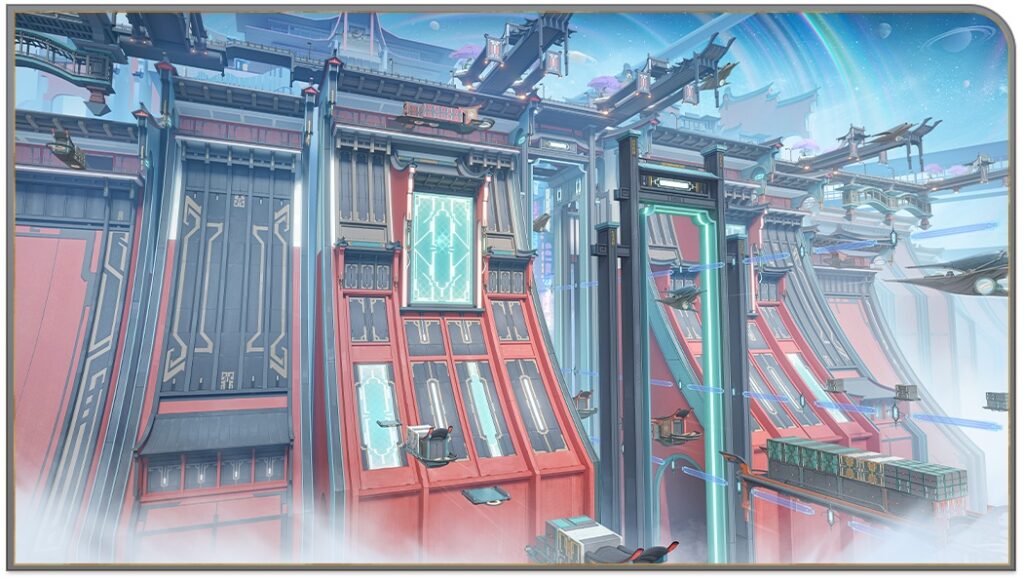
Governing Body: Xianzhou Alliance
If Jarilo-VI felt grounded, the Luofu goes cosmic.
The Xianzhou Luofu is one of six massive flagships traveling the stars in pursuit of the Abundance.
It blends traditional aesthetics with sci-fi architecture in a way that feels HSR.
Key Locations:
- Central Starskiff Haven
- Cloudford
- Stargazer Navalia
- Exalting Sanctum
- Divination Commission
- Artisanship Commission
- Alchemy Commission
- Scalegorge Waterscape
- Aurum Alley
- Fyxestroll Garden
- Shackling Prison
- Skysplitter
This map is bigger and more complex than previous ones.
Expect advanced puzzles like Hexanexus and Abacus Circuitry, layered pathways, and lore-heavy side content.
Exploration here feels strategic, not linear.
Penacony (Version 2.0)
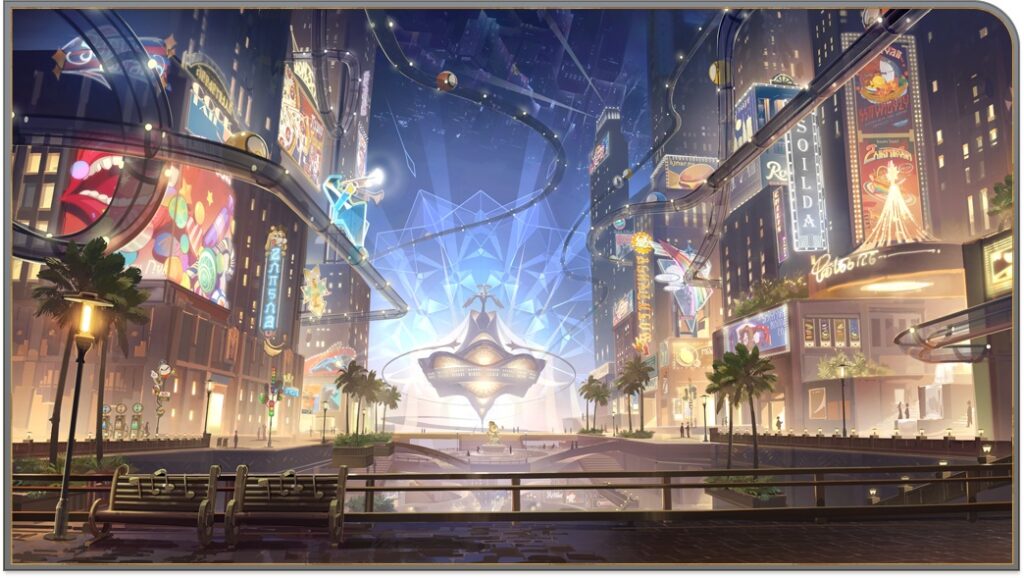
Governing Body: The Family
Penacony changed everything.
Once a prison planet, it’s now a dream-themed utopia where reality and imagination blend.
The storytelling here is ambitious, cinematic, and sometimes mind-bending.
Main Areas:
- The Reverie (Reality & Dreamscape)
- Golden Hour
- Dream’s Edge
- Dewlight Pavilion
- Clock Studios Theme Park
- Dreamflux Reef
- SoulGlad Scorchsand Audition Venue
- Penacony Grand Theater
- Radiant Feldspar
- Paperfold University
- Dream of Gnawing Oak
Penacony introduces layered maps, meaning you’ll explore different versions of the same area. It also features some of the most creative puzzle mechanics in the game.
This is where map design truly leveled up.
Amphoreus (Version 3.0)
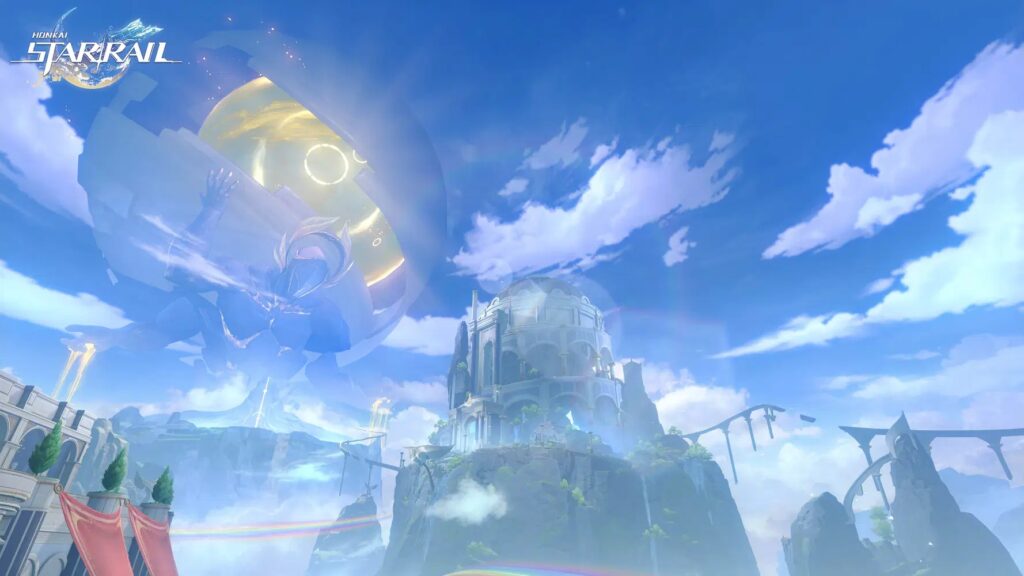
- Previous Names: Irontomb and Lygus
- Governing Structure: Titan-based civilizations
Amphoreus feels mythical. Ruled by gods and Titans, this world is where multiple Paths intersect.
Even Akivili, the Trailblaze Aeon, never fully explored it, which already tells you how mysterious it is.
Major Locations:
- “Eternal Holy City” Okhema
- “Strife Ruins” Castrum Kremnos
- “Abyss of Fate” Janusopolis
- “Bloodbathed Battlefield” Castrum Kremnos
- “Murmuring Woods” Grove of Epiphany
- “Sanctum of Prophecy” Janusopolis
- “Demigod Council” Dawncloud
- “Dragonbone City” Styxia
- “Fortress of Dome” Eye of Twilight
- “Cloudedge Bastion Ruins” Eye of Twilight
- “Lightless Chapel” Dawncloud
- “Fallen Twilight City” Okhema
- Aedes Elysiae
- “Warbling Shores” Styxia
- “Radiant Scarwood” Grove of Epiphany
- “Universal Matrix” Great Tomb of the Nameless Titan
- “Nightmare’s Echo” Great Tomb of the Nameless Titan
- “Memortis Shore” Ruins of Time
- Beyond Time: An Eternal Page
- Vortex of Genesis
Amphoreus is massive and lore-heavy.
The map design is denser, vertical, and packed with hidden pathways. Exploration here rewards patience.
If you love deep world-building, this one hits hard.
Planarcadia (Version 4.0 – HSR New Map)
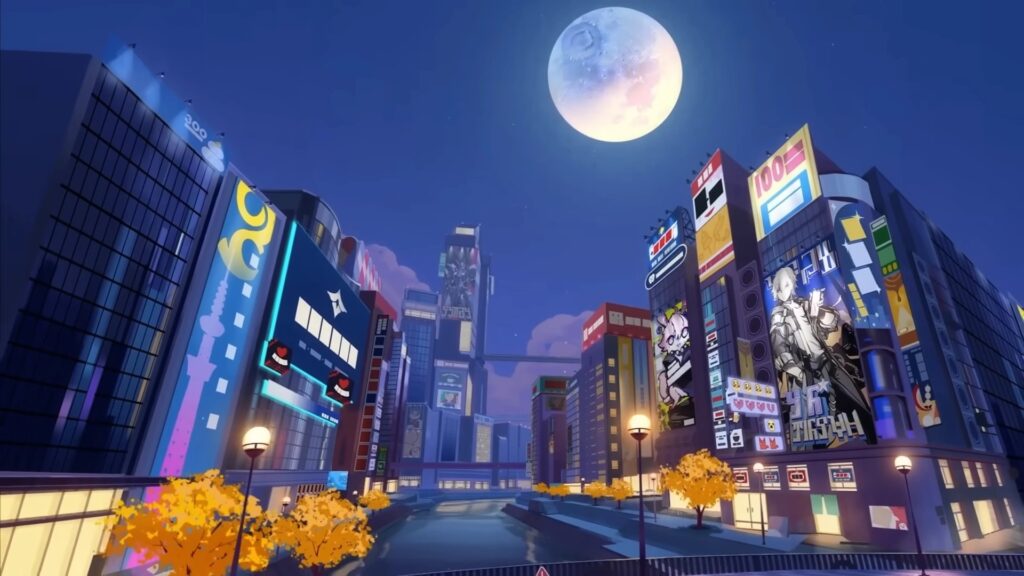
Governing Body: Aha & the Strategic Investment Department (Pearl as CEO)
And now we arrive at the chaos.
Planarcadia is the newest addition to the Honkai Star Rail map in Version 4.0, and it’s already one of the special planets we’ve seen.
Core Areas:
- Duomension City – A bustling hub city with 2D/3D dimensional mysteries
- Dovebrook District – Crime-heavy duel hotspot
- Graphia Academy – Art-focused academy (yes, Himeko studied here)
- World’s End Tavern – Base of the Masked Fools
Planarcadia feels experimental. It plays with dimension mechanics, humor, and creativity in ways no other world has.
And it feels like HoYoverse is just getting started.
Astropolis (TBA)
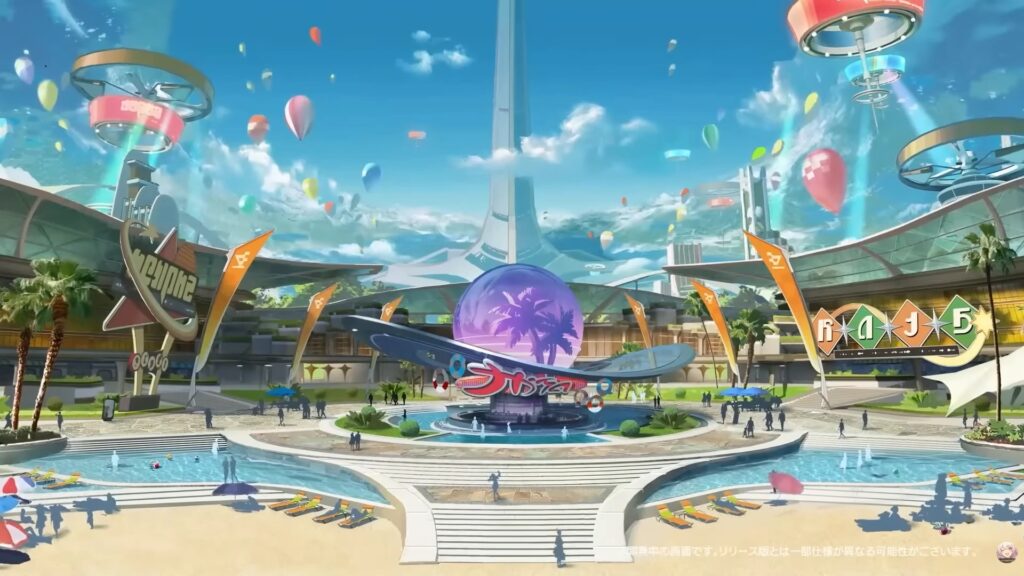
Governing Body: Interastral Peace Entertainment
Although not fully released yet, Astropolis has been teased as a future world.
Based on early information, it’s expected to bring corporate influence and entertainment culture into the spotlight.
And if history tells us anything, the map design will probably surprise us again.
See Also: Honkai Star Rail 4.0: Sparxie & Yao Guang Leaks!
Essential Map Icons You Must Understand in Honkai Star Rail
When you open your Honkai Star Rail map, it might look simple at first glance. Just icons, right?
Wrong.
Those little symbols are basically your treasure radar, farming guide, and progression tracker all rolled into one.
If you truly understand what each icon means, you’ll explore smarter, not harder. Now, we’ll take a proper look.
Space Anchors
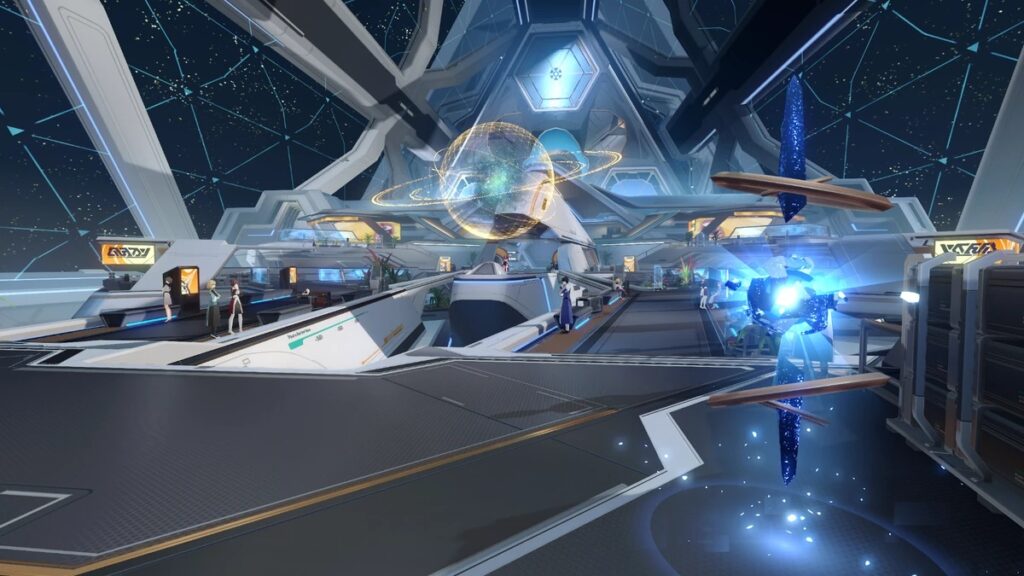
If you see a glowing anchor icon, activate it immediately. No debate. Why?
- Fully heals your team
- Revives fallen characters
- Unlocks fast travel points
- Refills Technique Points
Yep, this is your portable base camp.
Every time you enter a new zone, especially combat-heavy ones like Scalegorge Waterscape or Dreamflux Reef, activating nearby Anchors should be your first move.
In large maps like Xianzhou Luofu or Amphoreus, Anchors save you insane backtracking time.
Treasure Chests
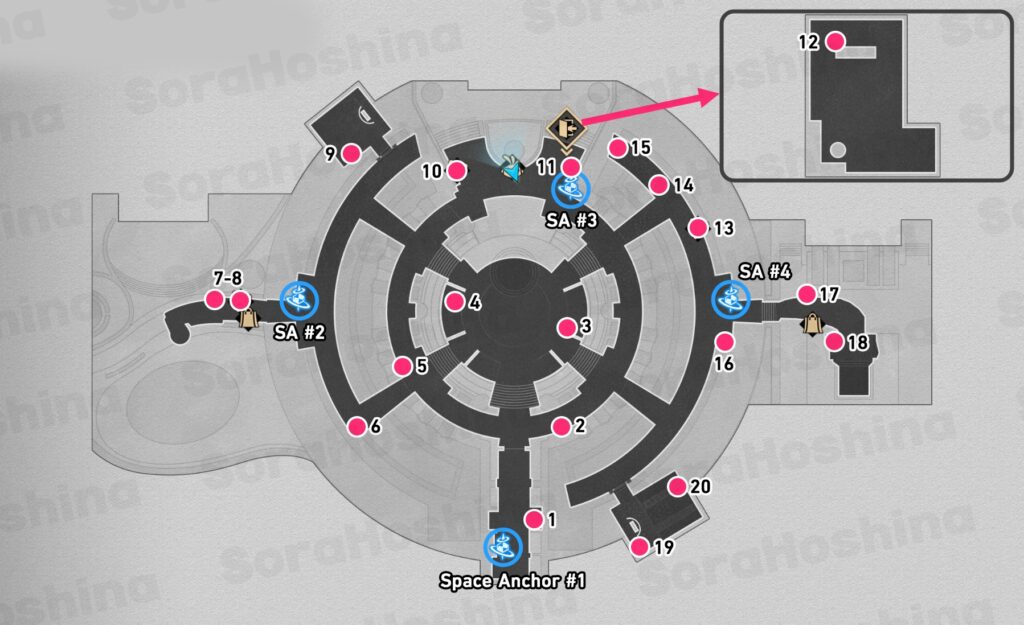
Not all chests are equal. And yes, it matters.
There are three main types:
1. Basic Treasure
- Common rewards
- Small Stellar Jade amount
- Usually easy to spot
2. Bountiful Treasure
- Requires defeating enemies or solving minor puzzles
- Better rewards
- Often guarded
3. Precious Treasure
- Puzzle-related or hidden
- Highest Stellar Jade value
- Sometimes tied to secret missions
If you’re saving for banners, chests are low-effort currency.
Especially in new areas like Planarcadia, early exploration can net you a solid Jade stash.
Warp Trotters
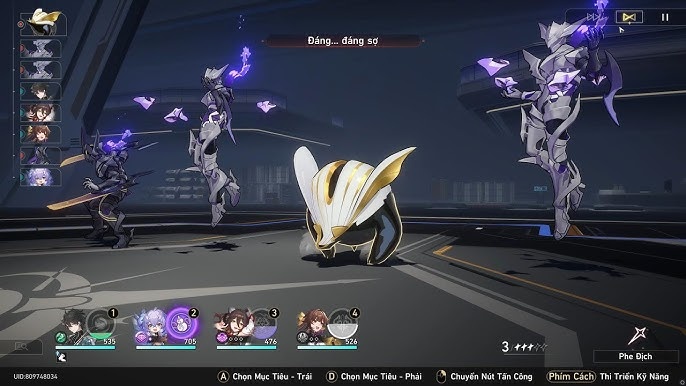
Warp Trotters are limited-time enemies on the map. If you don’t defeat them quickly, they flee, and you lose the rewards.
Why they matter:
- Guaranteed Stellar Jade
- Extra materials
- One-time reward per spawn
Treat them like emergency targets. Prioritize burst damage and avoid dragging the fight.
Calyxes
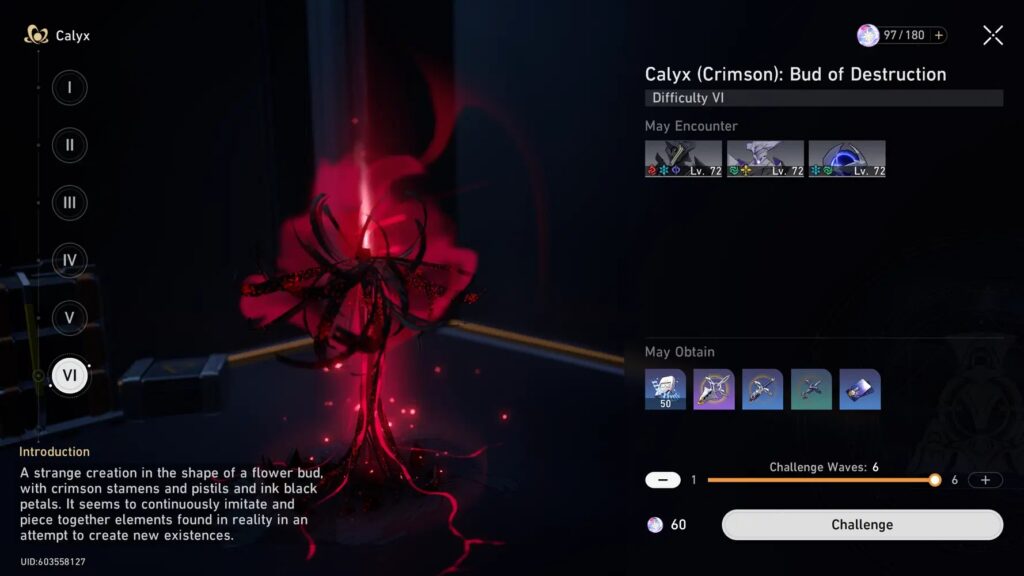
Calyxes are your go-to nodes for leveling up.
There are two types:
- Golden Calyx → Drops EXP materials and Light Cone upgrade items.
- Crimson Calyx → Drops character Trace materials.
These reset daily and cost Trailblaze Power. If you’re building a new character from a fresh banner, you’ll be visiting these a lot.
Stagnant Shadows
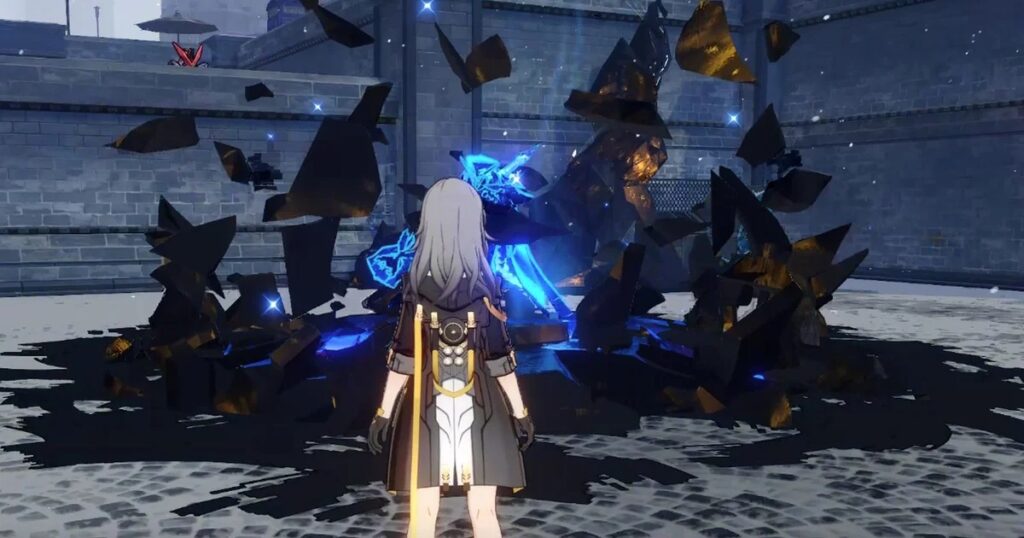
Want to ascend your character past level caps?
You’ll need materials from Stagnant Shadows.
These are repeatable mini-boss fights located in specific worlds. Each boss drops ascension material tied to certain characters.
Before pulling a new unit, check where its Stagnant Shadow is located.
Nothing’s worse than unlocking a character and realizing their materials are locked behind story progression.
Echoes of War
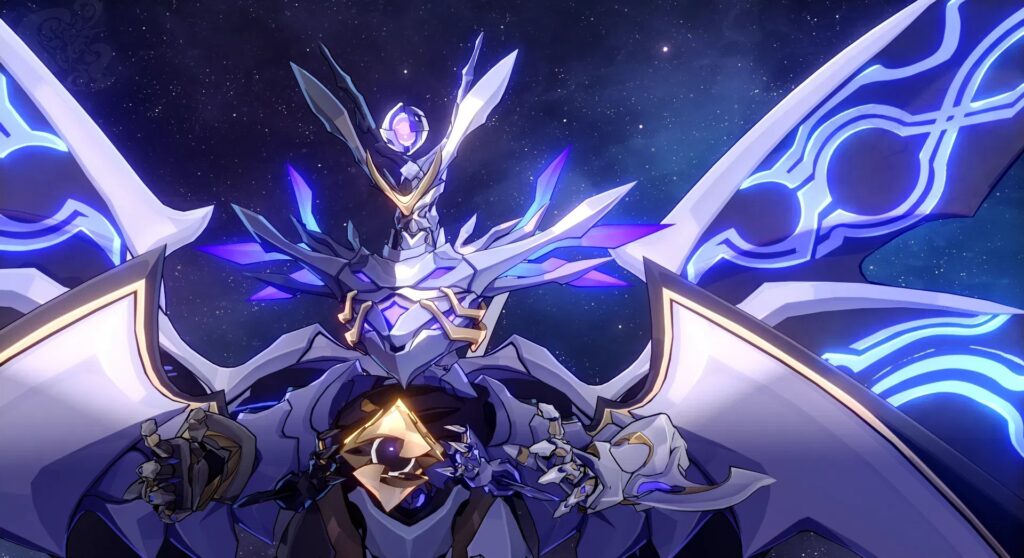
These are your weekly boss domains.
Important things to know:
- Limited to 3 rewards per week
- Drop rare Trace materials
- Sometimes drop Light Cone
Plan your farming. Prioritize the boss that matches your current character upgrades.
Caverns of Corrosion
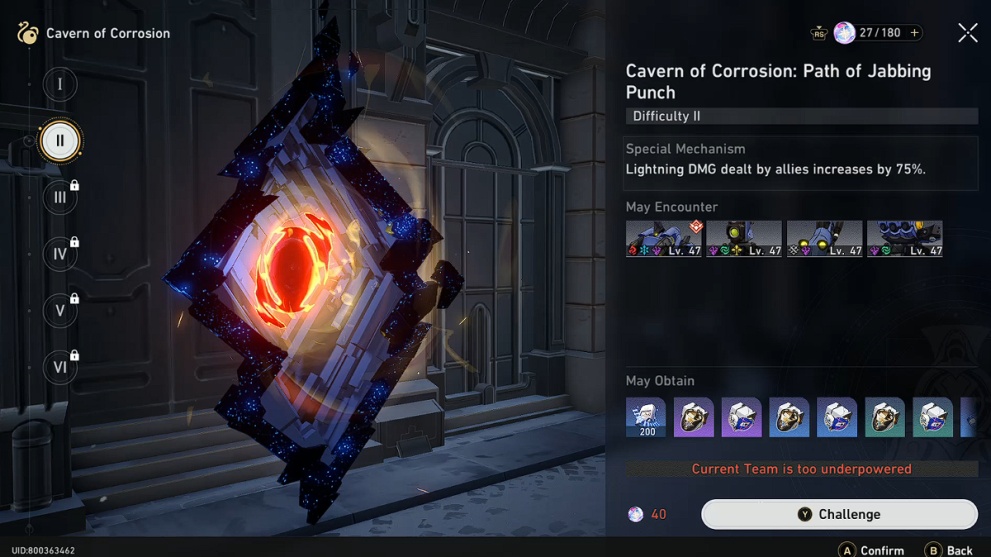
If you care about builds, this is your grind zone.
Caverns drop:
- 5-star Relic Sets
- Multiple set options per domain
Unlike Genshin Impact domains, there is no daily rotation schedule. That means you can farm your desired Relic Set anytime.
Huge quality-of-life difference.
Puzzles

Puzzles are marked differently by region, and each world has its own flavor.
Examples:
- Hexanexus (Luofu)
- Dream Ticker (Penacony)
- Navigation Compass
- Abacus Circuitry
- Janus’ Maze (Amphoreus)
Most puzzles reward:
- Stellar Jade
- Chests
- Achievements
If you’re aiming for 100% map completion, these are mandatory.
Hidden Missions
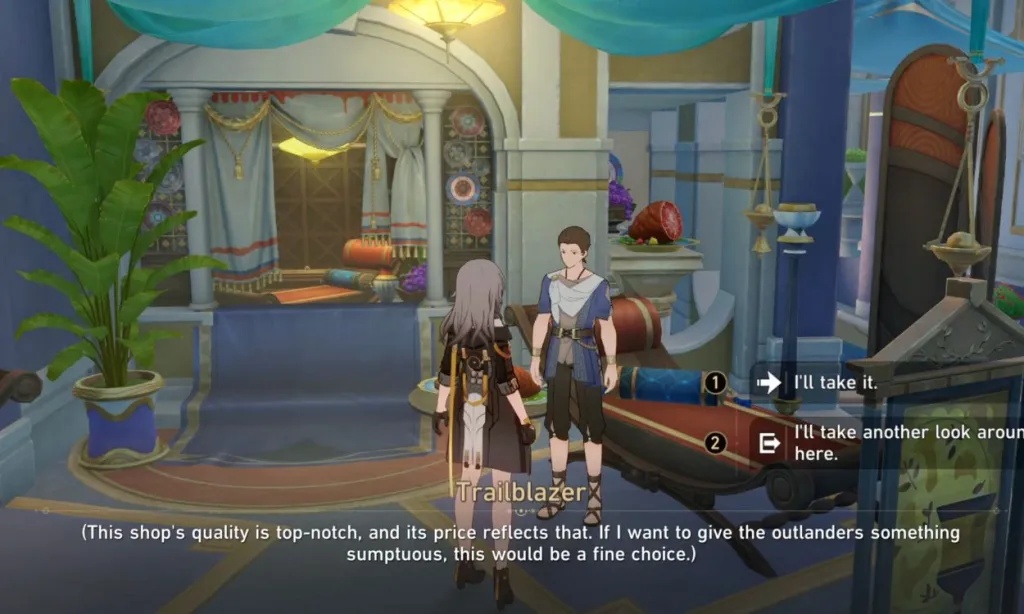
Not everything appears as an icon. Some side quests trigger when:
- Talking to specific NPCs
- Interacting with objects
- Revisiting areas after story progression
Jarilo-VI trash cans? Classic example.
These hidden missions often give:
- Extra Stellar Jade
- Lore expansion
- Achievement points
Exploration in HSR rewards curiosity.
Shops & World Shops
Some maps feature dedicated shops.
You’ll find:
- Consumables
- Recipes
- Collectibles
- World-specific currency exchanges
For example, certain planets use currency earned from exploration or side quests.
Don’t forget to spend them ‘cause they don’t convert automatically.
See Also: Honkai: Star Rail Currency Wars: Complete Guide to the New Auto-Chess Mode
Maximum Tips for 100% Map Completion

One thing you must know is that map completion in Honkai: Star Rail requires strategy, awareness, and knowledge of how HSR hides its rewards.
1. Use the In-Game Zone Counter (Your Secret Weapon)
Open your map and look at the top-left corner.
You’ll see something like:
- Treasure Chests: 18/22
- Warp Trotters: 1/1
- Puzzles: 4/6
That counter is your checklist.
Before leaving any sub-area (like Rivet Town or Dreamflux Reef), make sure those numbers match. If they don’t? You missed something.
Some puzzles only appear after story progression. If the count feels off, revisit later.
2. Always Activate Every Space Anchor First
This sounds basic. It’s not.
When entering a new region:
- Unlock all Space Anchors.
- Then start exploring.
Because when you miss a chest (and you will), fast travel saves massive backtracking time, especially in large maps like:
- Xianzhou Luofu
- Amphoreus
- Planarcadia
Efficiency means sanity.
3. Check Vertical Layers (HSR Loves Height)
Unlike flat map games, Honkai Star Rail hides content:
- On upper balconies
- Underground corridors
- Behind elevators
- On split-level platforms
Penacony and Luofu are especially guilty of this.
If your chest counter says 21/22 and you’re losing your mind… look up. Or down.
4. Defeat Warp Trotters Immediately
If you see a pigh icon, stop everything.
Warp Trotters can:
- Give Stellar Jade
- Only reward once
- Can flee if you’re too slow
Build at least one strong single-target DPS for quick clears. Losing a Trotter means losing guaranteed Jade. And nobody likes that.
5. Solve Every Puzzle Before Leaving the Area
Each region has different puzzles:
- Hexanexus (Luofu)
- Dream Ticker (Penacony)
- Navigation Compass
- Abacus Circuitry
- Janus’ Maze (Amphoreus)
Most give:
- Precious Chests
- Achievements
- Stellar Jade
Some puzzles reset daily (rare), but most are one-time. Finish them immediately so you don’t forget.
6. Revisit Old Worlds After Major Updates
New mechanics sometimes unlock:
- Previously inaccessible areas
- Additional puzzles
- Extra dialogue-triggered quests
Especially after:
- Equilibrium Level increases
- New Trailblaze Missions
- Major version updates (like 4.0 Planarcadia)
Don’t assume early maps are “done.” They rarely are.
7. Farm While You Explore
Map completion doesn’t mean ignoring progression.
While clearing areas:
- Fight elite enemies for materials
- Mark Calyx locations
- Unlock Stagnant Shadows
- Note Caverns of Corrosion
That way, you combine: Exploration + Farming + Progression. Triple efficiency.
8. Use Interactive Maps (Smart, Not Cheaty)
If you’re stuck at 99%, don’t torture yourself.
Use:
- HoYoLAB Official Interactive Map
- Community map databases
These help you locate:
- Exact chest spots
- Hidden Warp Trotters
- Puzzle solutions
There’s no trophy for suffering blindly.
See Also: Phainon Honkai Star Rail Guide: Skills, Relics, Banner Date & Build Tips
Okay, then, should you fully explore every Map in Honkai Star Rail? Yeah, of course.
Stellar Jades, relic farming routes, hidden lore, achievements, it all lives inside the HSR Map system.
And with Planarcadia expanding the universe even further, now’s the perfect time to revisit older worlds and clean up unfinished zones.
So next time you open your map and see that little chest icon missing… You know what to do.
TL;DR
- Honkai Star Rail features a zone-based exploration system where players unlock regions through Trailblaze Missions, with each world consisting of multiple sub-areas.
- There are three main types of maps in Honkai Star Rail: Exploration Maps (safe zones and NPC hubs), Combat Zones (enemy-heavy areas), and Special Instances (like Simulated Universe).
- Map completion in Honkai Star Rail requires strategic exploration, including activating Space Anchors, solving puzzles, and revisiting old worlds after updates to unlock new content.